


Founder
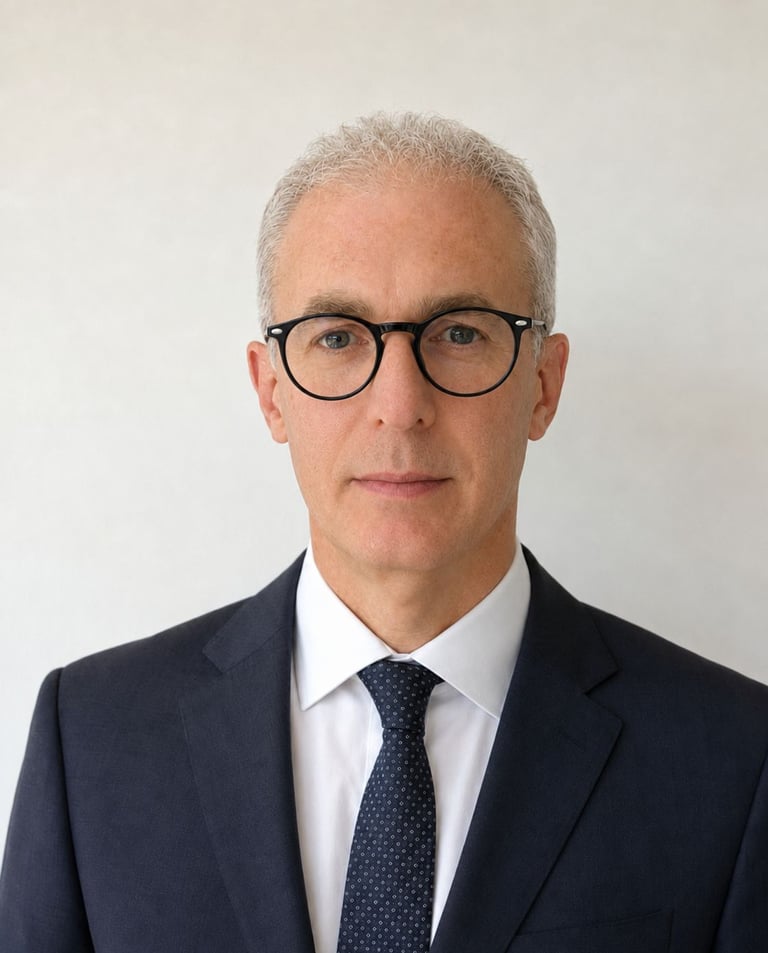
My name is Francesco and I graduated with a degree in Chemistry in 1995. Over the course of my career, I have specialised in the selection, development and marketing of raw materials and technical products for various industrial sectors.
Experiences
I have developed specialist expertise in the field of industrial waxes, used in applications such as hot-melt adhesives, inks, emulsions, release agents and polishes, as well as in synthetic fibres for reinforcing concrete and cementitious materials. My experience also includes synthetic fibres for the automotive sector, used in the production of technical components, composite materials, coatings and insulation solutions.


My Family Hystory
My professional career stems from a family entrepreneurial tradition spanning five generations, with roots dating back to the second half of the nineteenth century.
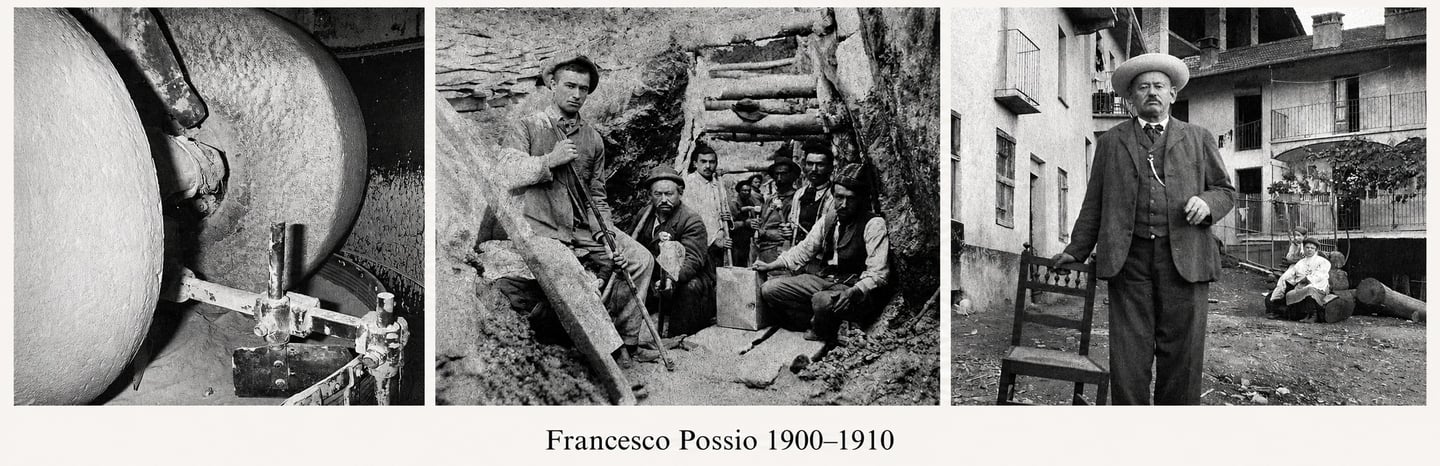
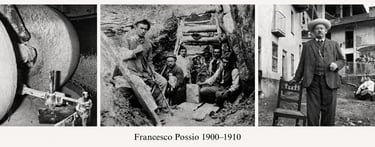
The entrepreneurial origins of the Possio family date back to the second half of the nineteenth century, in a period when water mills still represented a fundamental resource for the local economy. In 1872, the brothers Francesco, Carlo and Michele Possio purchased the ancient former feudal mill of Lanzo Torinese, originally used for grain milling. This marked the beginning of an important transformation: from a traditional milling activity to a business increasingly focused on the processing of industrial raw materials.
A central figure in this evolution was Francesco Possio, born in Lanzo in 1841 into a family of millers. Gifted with a particular talent for mechanics, he gained technical experience in Italy and abroad before returning to Lanzo, where he understood the industrial potential offered by the hydraulic power of the mills. His insight was to gradually convert the plants, no longer limiting them to grain milling, but using them for the processing of minerals such as talc, iron pyrite and asbestos, the latter mentioned here exclusively in its historical context, when it was still widely used before its danger to health was recognised.
In 1886, Francesco Possio obtained authorisation to operate a facility for the milling of talc, iron pyrite and asbestos. A few years earlier, with the purchase of the nearby mill owned by Giacomo Airola in 1882, he had created an industrial complex of considerable importance for the local area. The Possio family did not limit itself to mineral processing, but also began to search for and exploit deposits in the Lanzo Valleys, identifying areas rich in talc and other minerals.
The first deposits worked by the Possio company were located in the areas of Lanzo, Viù and other parts of the Valleys. Mining and milling activities later continued with talc extracted from various sites, consolidating the family’s role in the industrial minerals sector. At the beginning of the twentieth century, the company Francesco Possio e Figlio processed and sold minerals to important operators in the sector, including Callisto Cornut, a significant figure in the development of the Piedmontese mining industry.
Francesco Possio also succeeded in diversifying the business, using the hydraulic energy of his mills for other production activities. Together with his sons Giovanni and Pietro, he installed a sawmill and machinery for washing and shredding rags, an activity that proved particularly profitable and soon enabled the family to acquire a textile plant in San Francesco al Campo.
At the time of his death in 1910, Francesco Possio was remembered by the local press as a figure of great importance for the industrial progress of the Canavese area and the Lanzo Valleys, described as a pioneer and one of the first industrialists of the territory. After the succession, the textile activities passed to his son Giovanni, while mineral milling continued with Pietro Possio. From that moment on, the mining and industrial activity continued through the following generations, with the processing of talc from the mines of the Lanzo Valleys and, to a lesser extent, iron oxide used in the paper industry.
The Brunetta talc mine, located above the hamlet of Vrù in Cantoira, played an important role in the history of the business. On 26 January 1943, after the death of the previous concessionaire, Juvenal, his heirs informed the Ministry of Corporations that they were relinquishing the Brunetta concession in favour of the Possio brothers of Lanzo Torinese. The Royal Mining Corps then granted the Possio company an exploration permit, which was subsequently expanded in 1951.
https://www.cailanzo.it/index.php/le-commissioni/rifugi/visita-la-miniera-brunetta
In the following years, the company’s activities expanded to include talc extraction from several deposits in the Lanzo Valleys, including Brunetta, Funghera and Cucuc.
The mineral extracted from the Brunetta mine was transported down the valley by means of an aerial ropeway divided into several sections. The company operated a talc storage facility in Cantoira and a processing mill in Pessinetto, connected by a railway siding to the Turin–Ceres line, which enabled the processed material to be shipped efficiently.
The Possio family also owned a production plant in Lanzo Torinese, equipped with nine Delille high-ventilation mills, with a declared total production capacity of approximately three tonnes per hour. The plant was also fitted with automatic product-bagging systems.
At the end of the 1940s, a gradual process of modernisation and expansion of the mining facilities began. New tunnels, facilities for the miners and mechanised mineral-transport systems were built. During the 1960s, an electric locomotive and a Decauville narrow-gauge railway were introduced to transport the talc from the mine tunnel to the departure station of the aerial ropeway.
The business subsequently continued under the name Società Francesco Possio S.a.s. per Minerali di Talco. By a decree issued by the Turin Mining District on 28 August 1969, the company was formally granted a fifteen-year mining concession for the Brunetta mine.
During the 1970s, rising production costs and increasing competition from lower-priced products gradually made mining operations less economically sustainable. Production declined and, in the following years, the Possio company ceased its activities at the Brunetta mine, bringing industrial talc extraction in the Lanzo Valleys to an end.
My grandfather, Francesco Possio, developed and consolidated this important business in the field of industrial minerals, laying the foundations for an entrepreneurial and technical journey that would later be continued by my father, Pietro Possio.
Throughout his career, my father developed extensive knowledge of the market for raw materials used in the cement and construction industries. Thanks to his experience and his ability to anticipate market developments, he transformed the historic mining and mineral-processing activities of Possio Pietro S.a.s. into a specialised trading company focused on the distribution of PVA fibres and polyvinyl alcohol, mainly intended for cementitious and composite materials.
This evolution led to the creation of Thermofibers, a company that established itself through an approach based not only on product distribution, but above all on technical expertise, application knowledge and direct customer support.
My scientific education, culminating in a degree in Chemistry, provided me with the foundation required to develop a deeper understanding of materials, production processes and their industrial applications.
I subsequently joined the company with responsibility for developing the technical and commercial aspects of PVA fibre applications. Over the years, I visited manufacturing plants in China on numerous occasions, building direct relationships with leading producers and gaining in-depth knowledge of every aspect of fibre production, quality control and application.
At the same time, I travelled extensively throughout Europe and India to meet customers, support application projects and share the expertise I had acquired directly in the field.
This international experience enabled me to develop a thorough understanding of the requirements of different markets and of the many applications of reinforcing fibres in construction materials. Technical consultancy consequently became one of the main added values offered to our customers, together with the ability to identify the most appropriate solution for each specific application.
In November 2024, the sudden passing of my father Pietro marked a profound turning point in both my personal and professional life. Driven by the desire to continue the path established by my family and to preserve its heritage of expertise, relationships and credibility, I set up Proreuse’s new industrial division specialising in technical fibres and concrete reinforcement materials.
Today, as Managing Director of Proreuse, I continue to follow the same philosophy that guided the generations before me: providing customers not only with high-quality products, but also with experience, technical expertise and practical support in selecting and using the solutions best suited to their requirements.
This journey is made even more meaningful by the presence of my son Alessandro in the company, who has chosen to work alongside me in the development of Proreuse. His involvement represents the natural continuation of a family entrepreneurial tradition spanning more than a century, one that continues to look towards the future with the same passion, integrity and capacity for innovation that have always defined its history.
Five generations, more than 150 years of experience and one shared vision: to build lasting relationships and create value through expertise, reliability and daily commitment.

