
PVA fiber manufacture
The process described produces polyvinyl alcohol (PVA) fiber by extruding a hot, filtered aqueous PVA solution through a spinneret into a concentrated sodium sulfate bath. The salt removes water from the liquid polymer jets and causes them to coagulate into continuous filaments. These filaments are then drawn, dried under tension, heat-treated and wound. The final mechanical performance depends strongly on polymer quality, solution concentration and viscosity, bath composition and temperature, spinning speed and the total draw ratio.
2. Wet spinning and coagulation
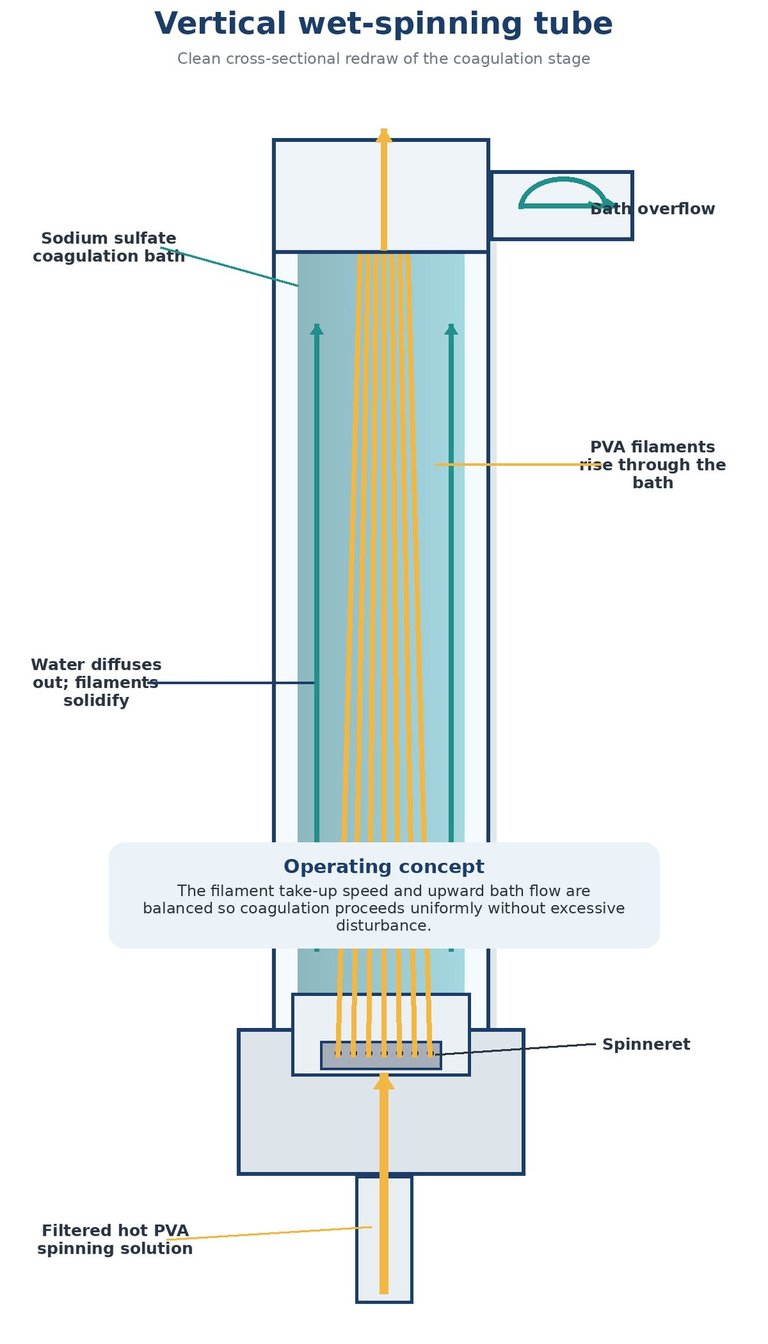
The heated spinning solution is delivered to a vertical spinning machine. It is forced through thousands of fine spinneret holes into a vertical tube filled with an aqueous sodium sulfate coagulation bath. Water diffuses out of the PVA jets, and the concentrated salt bath converts the liquid jets into solid filaments.
The spinneret geometry is selected according to the required product. Examples in the document range from 0.10 to 0.15 mm hole diameter and from 2,000 to 60,000 holes.
In the vertical tube, the coagulation liquor rises from the bottom. The filament take-up and bath overflow are adjusted so coagulation proceeds uniformly without excessive hydrodynamic disturbance.
The described arrangement keeps the polymer-jet speed below about 5 m/min and limits the relative speed difference between the filaments and the upward-flowing bath.
Water entering the bath from the spinning solution is removed through an evaporator, while sodium sulfate is replenished to maintain the required concentration.
Coagulation-bath control
The first bath is normally operated near sodium sulfate saturation, usually at 40-50 °C.
A high sodium sulfate concentration promotes rapid coagulation, reduces mutual sticking and generally improves tenacity.
Lower bath concentration can make the fiber cross section more circular, but the process becomes less stable because adjacent filaments may stick together.
Bath temperature is critical: below the recommended range coagulation slows and sodium sulfate may precipitate; increasing temperature generally improves cross-sectional circularity.
1. Preparation of the spinning solution
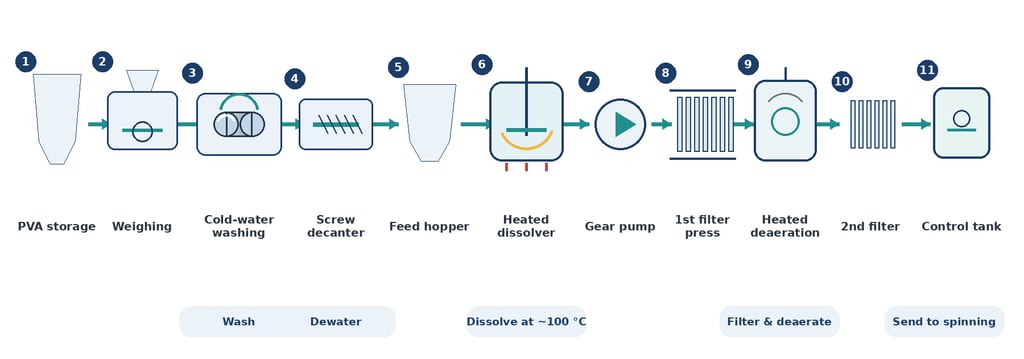
Raw PVA powder is stored, weighed and washed with cold water to remove water-soluble residues, especially sodium acetate and sodium hydroxide.
After washing, a screw decanter adjusts the water content before the material is transferred to a hopper and metered into the dissolver.
A controlled quantity of water is added. The mixture is heated by steam to approximately 100 °C and stirred for several hours until dissolution is complete.
The industrial spinning solution is normally maintained at about 14-16 wt% PVA. A degree of polymerization near 1,700 is identified as typical for industrial fiber production.
The solution passes through a first filter press, a heated deaeration tank, a second filter and a control tank before reaching the spinning machine.
To avoid gel formation and maintain stable flow, the preparation tanks and pipelines are kept hot; the document indicates temperatures above 90 °C and a working viscosity of roughly 4-15 poise at 90 °C.
3. Drawing, drying and heat treatment
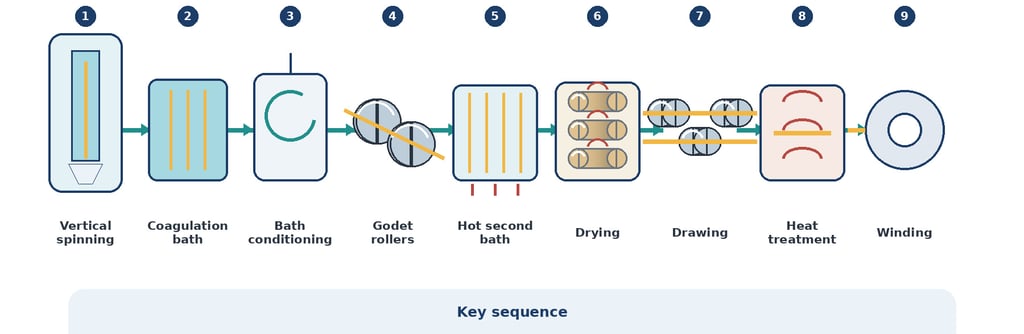
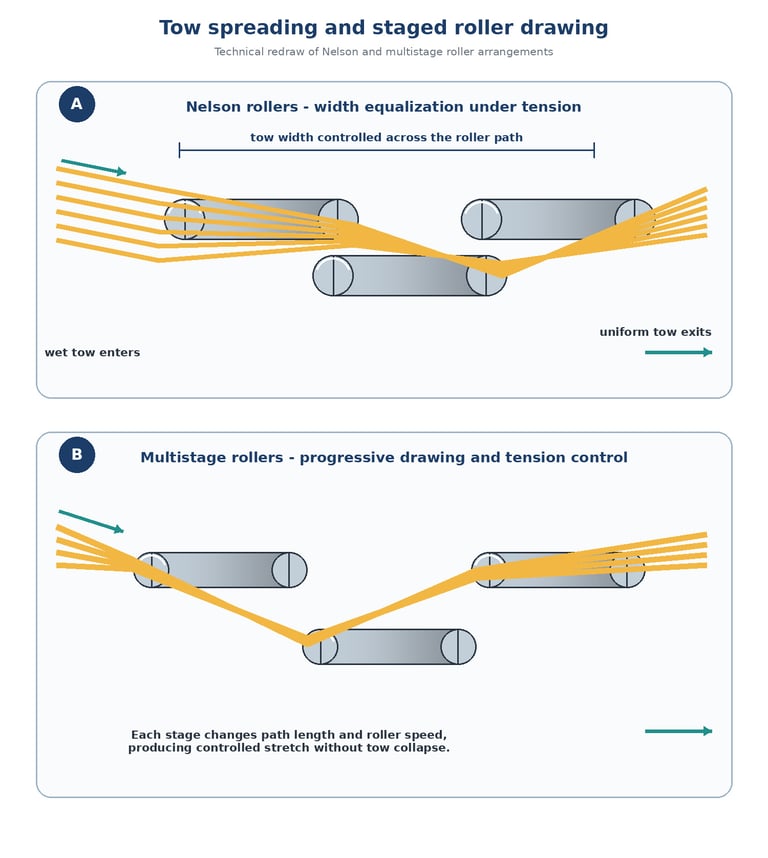
After leaving the first coagulation bath, the filament tow is pulled by rollers, drawn in air and passed through a hot second sodium sulfate bath for hot wet drawing. Residual salt solution is squeezed from the tow, and its width and thickness are made uniform before drying.
Drying is performed under tension on heated roller systems, using circulating hot air or radiant heat.
The process flow shown in the document continues with additional drawing, heat treatment and winding.
Drawing aligns the PVA molecular chains and is essential for increasing strength. The document describes guide stretching, roller stretching, wet hot drawing in a salt bath and dry hot drawing in a heated atmosphere.
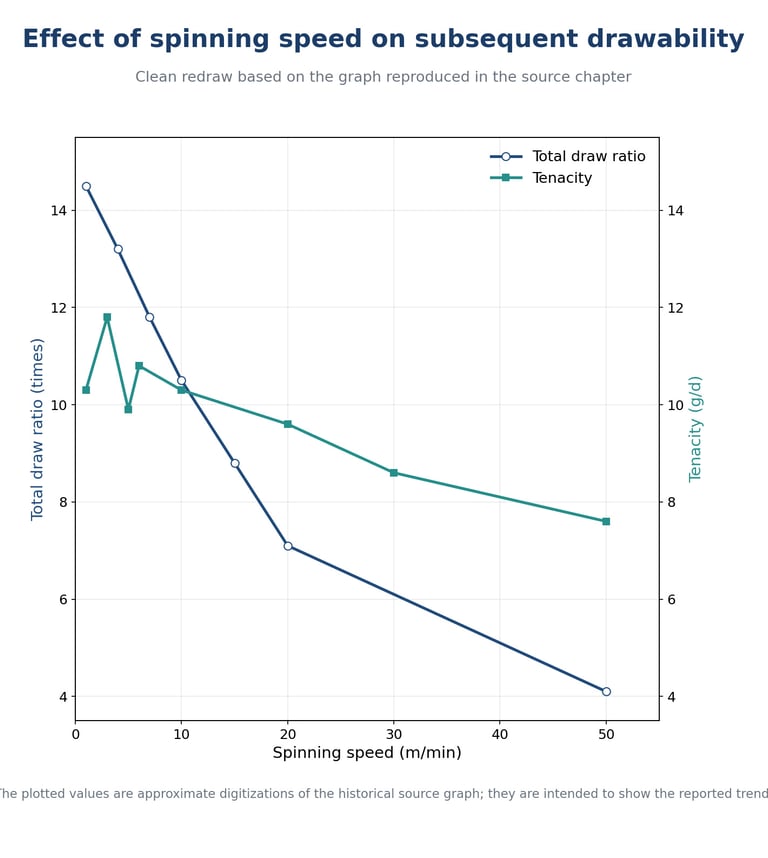
High initial spinning speed improves output but reduces the draw ratio that can subsequently be applied and may lower tenacity. High-tenacity production therefore favors a relatively low spinning speed followed by a high draw ratio.
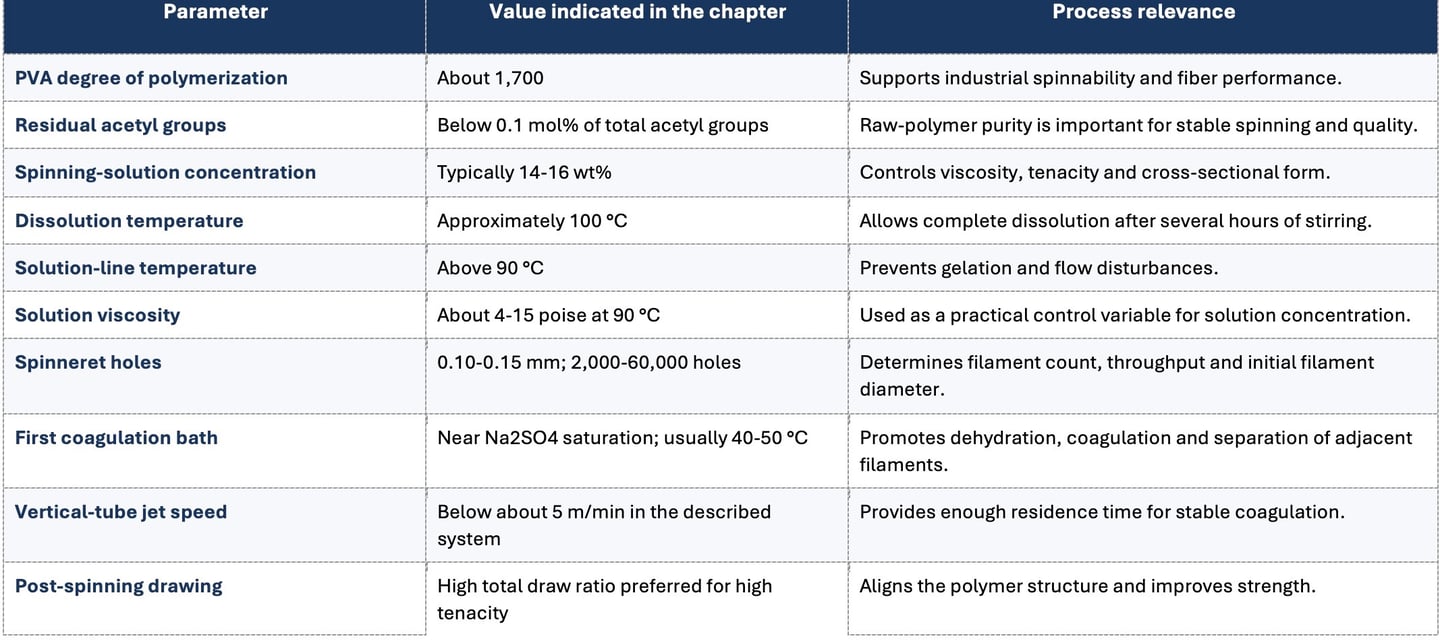
4. Main operating parametersmeter
5. Fiber morphology and performance
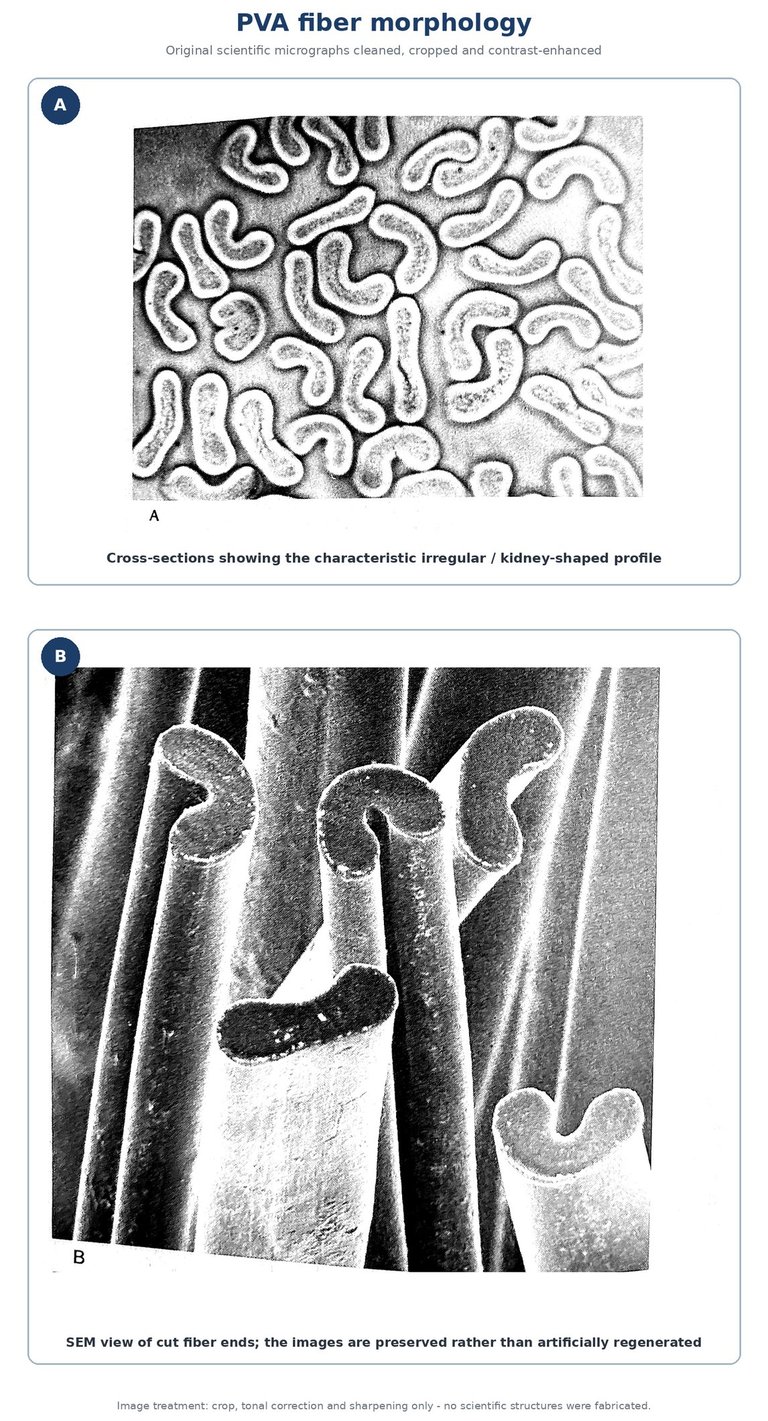
Wet-spun PVA fiber produced in a sodium sulfate bath develops a characteristic skin-core structure. The outer skin forms first and is relatively dense, while the interior remains more porous during the early stages of coagulation and dehydration. The resulting cross sections are often irregular or kidney-shaped rather than perfectly circular.
Increasing the concentration of the PVA spinning solution generally improves cross-sectional circularity, although excessively high concentration raises viscosity and reduces processability.
Increasing coagulation-bath temperature also makes the cross section more circular.
Higher sodium sulfate concentration generally increases tenacity, while lower concentration may improve circularity but increases the risk of filament sticking.
The chapter reports an experimental cold-water quench after a high-temperature bath that increased tenacity from 7.13 to 10.4 g/d and elongation from 6.5% to 11.5%. It also notes that this high-temperature method was not yet established for routine production because of equipment and operating difficulties.
6. Simplified industrial sequence
PVA powder → washing → dewatering → dissolution → filtration → deaeration → second filtration → spinneret extrusion → sodium sulfate coagulation → take-up → hot wet drawing → salt removal / tow equalization → tension drying → further drawing → heat treatment → winding
The essential technical objective is to balance rapid and uniform coagulation with sufficient drawability. Stable solution temperature, bath composition and controlled spinning speed are therefore central to obtaining strong, uniform PVA fibers.